OPmobility is combining its industrial expertise with technologies from NVIDIA and Siemens to transform how its products are designed, validated and manufactured. The Group is building a more connected and AI-enabled engineering environment to accelerate development, improve quality and increase its capacity to support customer programs.
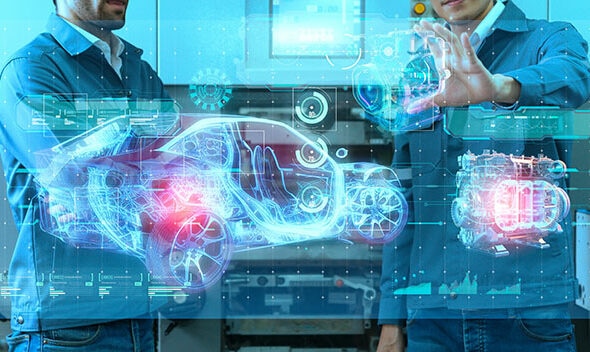
At GTC Berlin, OPmobility worked with NVIDIA on an agentic Computer-Aided Engineering, or CAE, workflow for automotive bumper development. The solution uses specialized AI agents to coordinate key stages of the engineering process, including geometry and mesh preparation, structural and crash simulation, results analysis, compliance verification and report generation.
Rather than automating a single task, these agents work together across a complete engineering workflow. Engineers remain fully in control of key design choices, technical trade-offs and final validation, while AI performs complex, repetitive and time-consuming activities. This approach is designed to shorten development cycles, improve consistency and reduce potential errors, enabling engineers to dedicate more time to innovation, material development and customer collaboration.
Built using components of the NVIDIA Agent Toolkit – an open stack for building and running enterprise AI agents-, NVIDIA Nemotron open models and the NVIDIA OpenShell secure runtime, the workflow brings together the reasoning, orchestration and governance capabilities required to operate AI agents across complex engineering processes. The architecture also controls agents’ access to engineering applications, files, networks and AI models, helping protect sensitive customer and product data. As the implementation scales, OPmobility will leverage NVIDIA’s ecosystem of AI-native software partners to extend the agentic engineering workflow with domain-specific capabilities.
In parallel, OPmobility is working with Siemens to strengthen digital continuity across the product lifecycle. The Group is currently deploying Teamcenter X ®, the cloud-based Product Lifecycle Management platform from the Siemens Xcelerator portfolio, as a digital thread backbone for product information and development processes across its worldwide R&D network. By connecting teams, tools and data from initial design through engineering, simulation and manufacturing, this digital thread will support greater collaboration, consistency and faster, better-informed decisions.
This broader digital environment can also be extended to industrial digital twins. Siemens Digital Twin Composer, powered by NVIDIA Omniverse libraries, brings together detailed 3D representations and operational data to help visualize, test and optimize products, production processes and manufacturing environments before physical implementation. OpenUSD provides a common framework for exchanging complex 3D information across the different tools used during design, simulation and validation.
Together, these complementary initiatives connect reliable product data, agentic engineering workflows and digital twins, laying the foundations for a more collaborative and AI-ready engineering environment.
Sandrine Ledru, Executive Vice President and Chief Digital and Information Officer, at OPmobility said: Digital continuity and artificial intelligence are transforming the way we approach product development. By connecting our data, tools and teams, and by entrusting complex and repetitive workflows to AI agents, we enable our engineers to focus on the decisions where their expertise creates the greatest value. This combination will help us innovate faster, improve quality and strengthen our ability to respond to our customers’ needs.