In the automotive sector, where logistics flows are becoming increasingly complex and regionalized, effective supply chain management is becoming a key driver of reliability and agility. With ELITE, OPmobility gains a centralized view of all its logistics flows, enabling it to better anticipate and manage its operations to build a more resilient and sustainable supply chain.
Summary :
→Turning Data into the Ability to Anticipate
→ Evolving Practices as Well as Tools
→ Toward a More Competitive and Sustainable Supply Chain
Long viewed as an operational function, the supply chain has become a strategic driver for the automotive industry. In a more volatile environment, where production cycles are shortening and customer demands are intensifying, the ability to manage flows in real time, while ensuring production, costs, and lead times, now makes all the difference.
“To meet these new challenges, companies in the automotive industry must undergo a true transformation of their logistics model: organization, methodology, fleet, and IT systems.” Kai Althoff, CEO of 4Flow
Managing End-to-End Workflows
To improve reliability, organizations must move beyond a transport management approach that remains too fragmented. Data continuity, from suppliers to customers, becomes a key factor in anticipating unforeseen events, making faster decisions, and better coordinating decisions across sites, carriers, and field teams.
Transport Management Systems (TMS) and regional Control Towers pave the way for a more integrated model. They enable the centralization of planning, execution, monitoring, and performance management of logistics flows, while maintaining localized oversight tailored to the realities of each region.
At OPmobility, this approach takes shape with ELITE, a global program for optimizing transportation operations that combines a cutting-edge TMS with regional Control Towers across all its Business Groups. In partnership with 4Flow, a global provider of supply chain consulting, software, and logistics services, the goal is to enhance end-to-end visibility, improve delivery reliability, and transform transportation data into a driver of operational performance.
“The supply chain is, first and foremost, a physical flow of materials: trucks, ships, factories. But without reliable, real-time data, it’s impossible to manage these operations effectively.” Jean-François Corraze, Supply Chain Director at OPmobility
Turning Data into the Ability to Anticipate
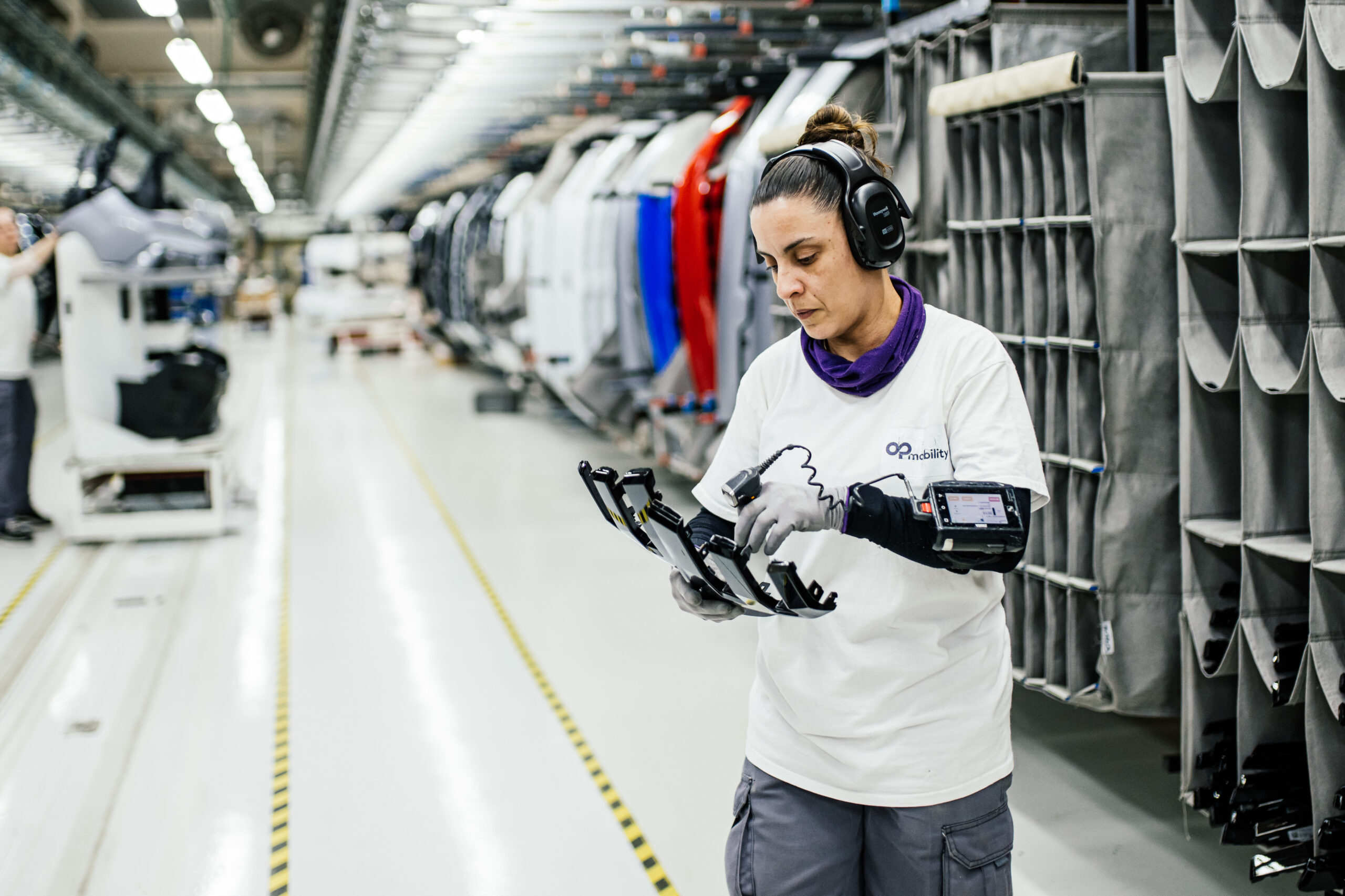
Digitalization creates value only if it is based on reliable, shared, and actionable data. In the supply chain, this quality of information enables a shift from a reactive approach to a predictive one: identifying risks earlier, comparing scenarios, tracking expenses, and measuring performance more accurately.
“By engaging our teams and standardizing and digitizing transportation processes, we’re improving visibility across all flows and enhancing our operational efficiency.” Jean-François Corraze, Supply Chain Director at OPmobility
Evolving Practices as Well as Tools
As with any digital transformation, tools alone are not enough. Reinventing the supply chain also depends on teams’ ability to adopt new methods, share common standards, and collaborate more closely with the entire logistics ecosystem.
Carriers, suppliers, manufacturing sites, and central teams all benefit from working on a common foundation. Direct connectivity to systems minimizes data re-entry, reduces errors, improves traceability, and facilitates the optimization of delivery routes and truck loading.
“Technology isn’t everything: when a company adapts its organization, engaging employees and stakeholders in this transformation is just as important.” Kai Althoff, CEO of 4Flow
Toward a More Competitive and Sustainable Supply Chain
For industrial players, the benefits are numerous: more precise deliveries, better cost control, secure supply chains, and a reduced environmental impact from transportation. Ultimately, this approach will enable OPmobility to better manage a fleet of approximately 1,300 trucks per day serving 152 factories in 28 countries.
More connected, more predictive, and more collaborative, our ELITE supply chain is becoming a new foundation for industrial performance. By combining industry expertise, data quality, governance, and change management, it helps strengthen the competitiveness, resilience, and sustainability of the automotive industry.